PDRI

Blog was updated October 5, 2026
Capital project organizations don't lack best practices.
They have stage gates, project controls, risk processes, front-end planning, constructability reviews, and decades of research showing what improves project outcomes.
Yet results remain inconsistent.
Some projects perform exceptionally well. Others experience cost growth, schedule delays, rework, or significant changes during execution.
If we know what works, why aren't the results more repeatable?
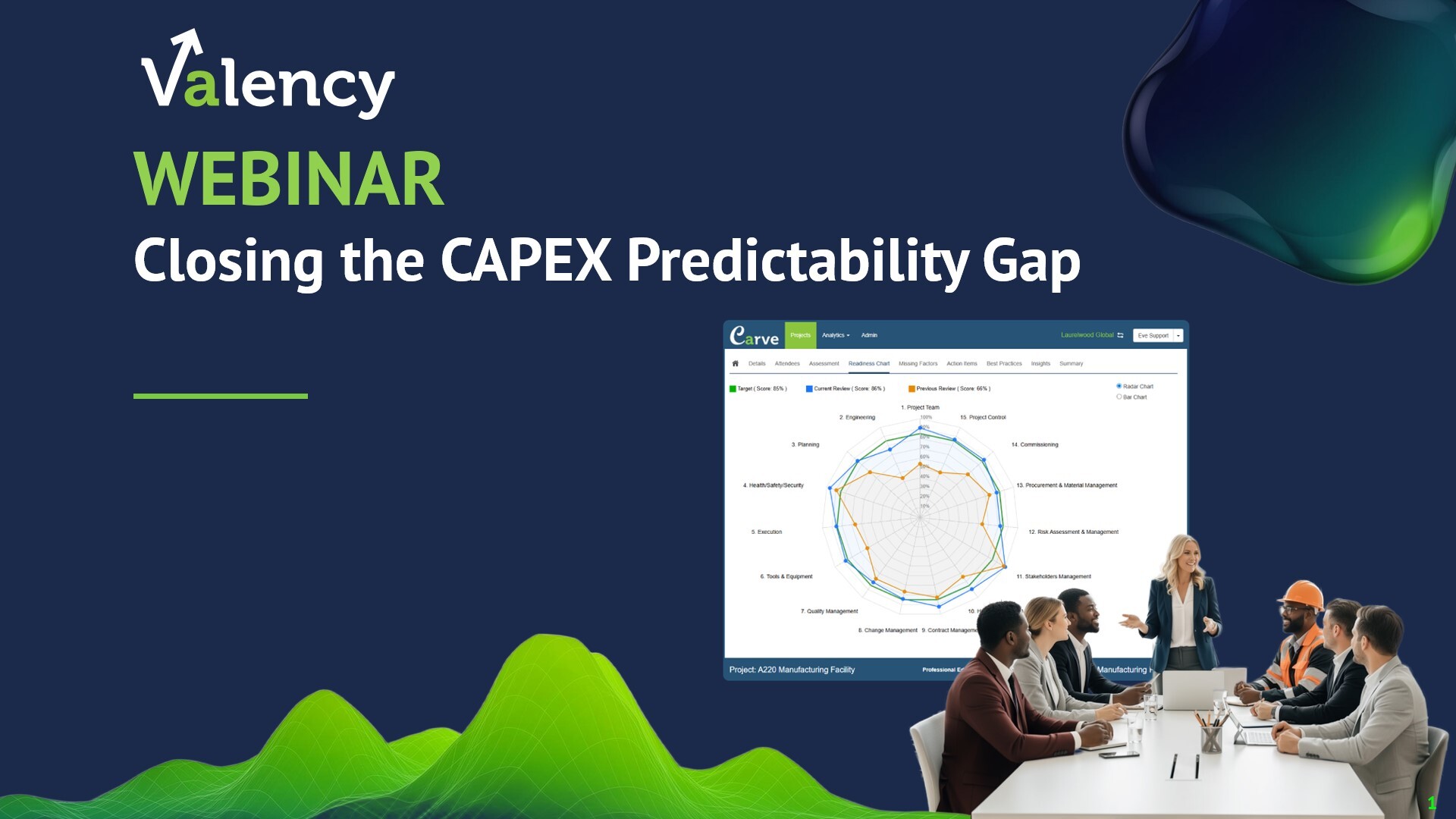
That was the question we explored in our recent webinar, Closing the CAPEX Predictability Gap.
Most organizations concentrate their strongest readiness and assurance resources on a relatively small number of large, high-visibility projects.
As project size decreases and volume increases, readiness assessment often becomes less structured and less consistent. That creates a portfolio blind spot: the part of the portfolio with the most projects is often the part with the least systematic readiness oversight.
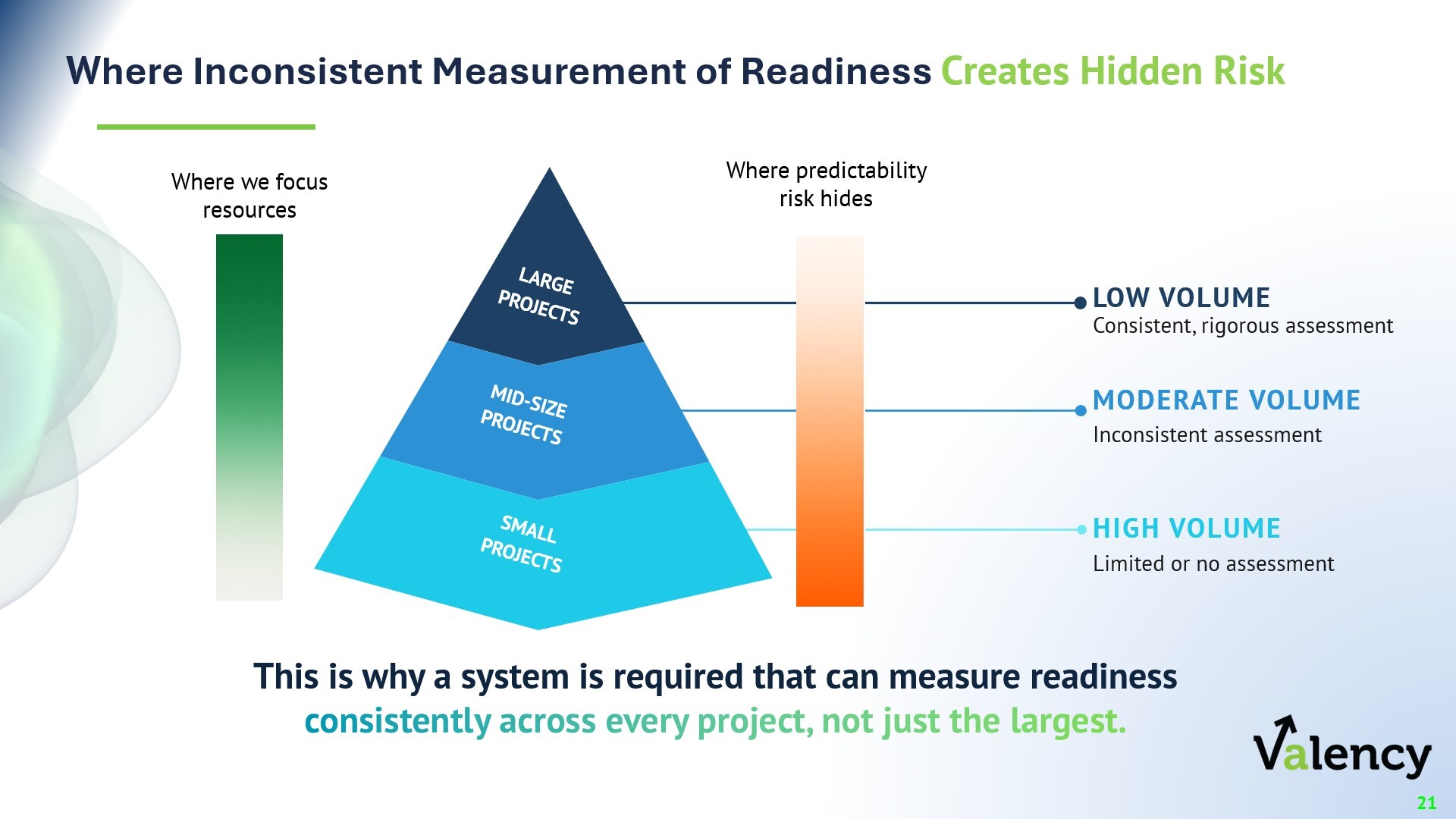 Individually, those smaller projects may carry less risk. Collectively, they can represent a significant source of portfolio-level predictability risk.
The answer is not to subject every small project to the same assurance process used on a megaproject. It is to right-size the level of rigor while maintaining a consistent way of measuring readiness.
A complex, high-risk project may warrant an independent or facilitated assessment. A smaller, more repeatable project may be appropriately assessed through peer review or structured self-assessment.
Different levels of rigor. One consistent readiness standard.
Project readiness tests whether the project has completed the right work, to the right level of maturity, before the next major commitment is made. It requires discipline: assessing readiness against a consistent standard, looking for evidence, and being willing to surface gaps before moving forward.
That discipline has to continue beyond the funding or investment decision.
Unresolved risks can carry into execution, while new risks emerge through design, procurement, construction, commissioning, and startup. If they are not identified early enough, they can appear later as change orders, rework, delays, cost growth, and disruption.
That is why readiness cannot be treated as a one-time check.
PDRI supports readiness during front-end planning. Construction Readiness tests whether the conditions are in place to move confidently into execution. Commissioning & Operational Readiness extends that same discipline through startup and the transition into operations.
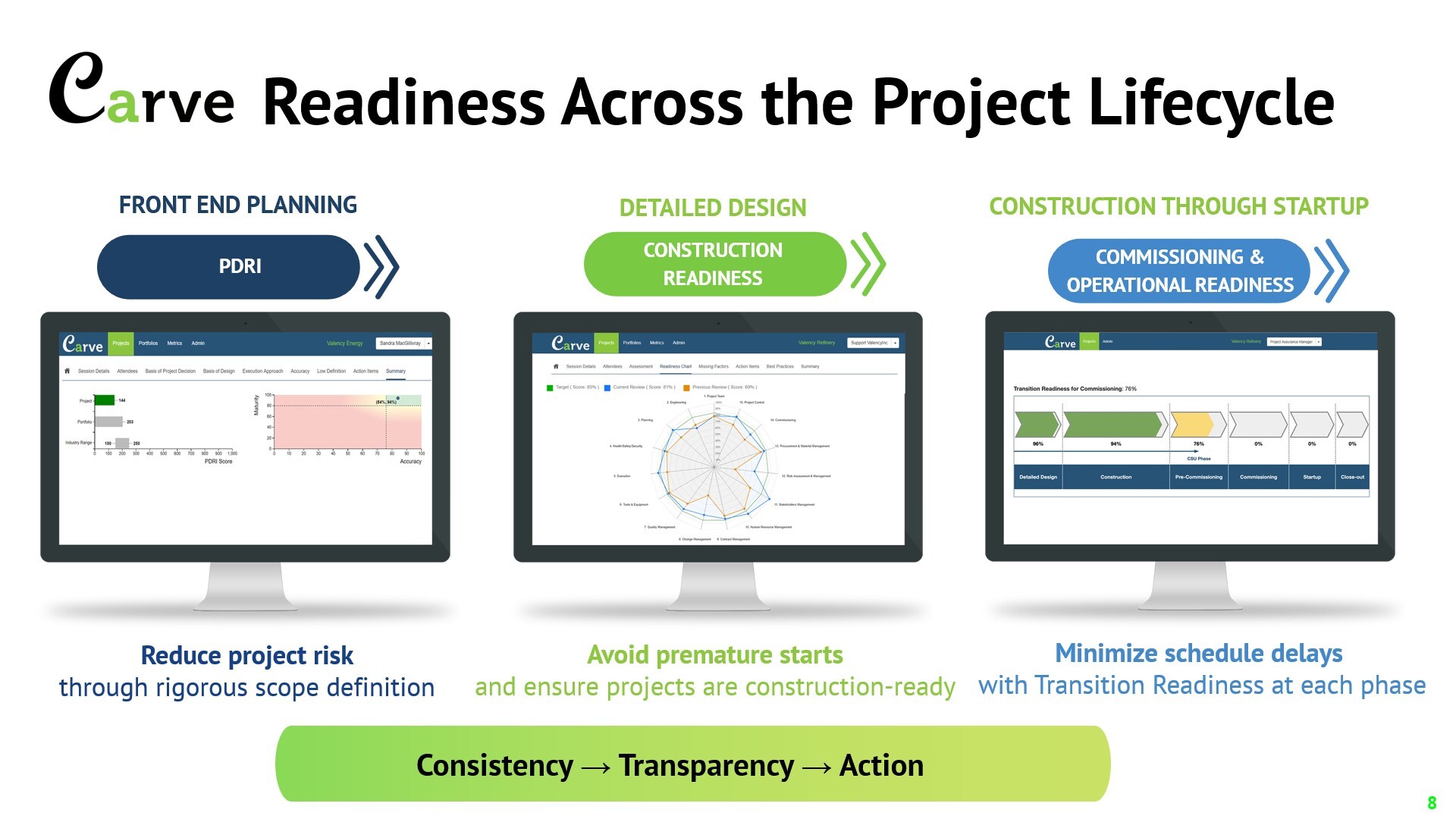
The objective is not to add more gates or process. It is to apply the same readiness discipline at the right points in the lifecycle, identifying gaps while there is still time to act.
The real challenge is consistency.
If every project team, facilitator, or business unit uses a different readiness process, leadership loses the ability to compare results, identify recurring gaps, and understand where risk is building across the portfolio.
A more systematic approach comes down to three things:
Consistency. The same underlying readiness framework, with rigor right-sized to project complexity and risk.
Comparability. Results that can be compared across projects and against company or industry benchmarks.
Continuity. Readiness revisited as projects move from planning through design, construction, commissioning, and startup.
When those three are present, readiness becomes a repeatable way to see, compare, and manage risk across the portfolio.
Knowing the methodology is not enough.
In our experience, sustainable implementation depends on three elements working together: methodology, capability, and a platform or process that makes the practice repeatable.
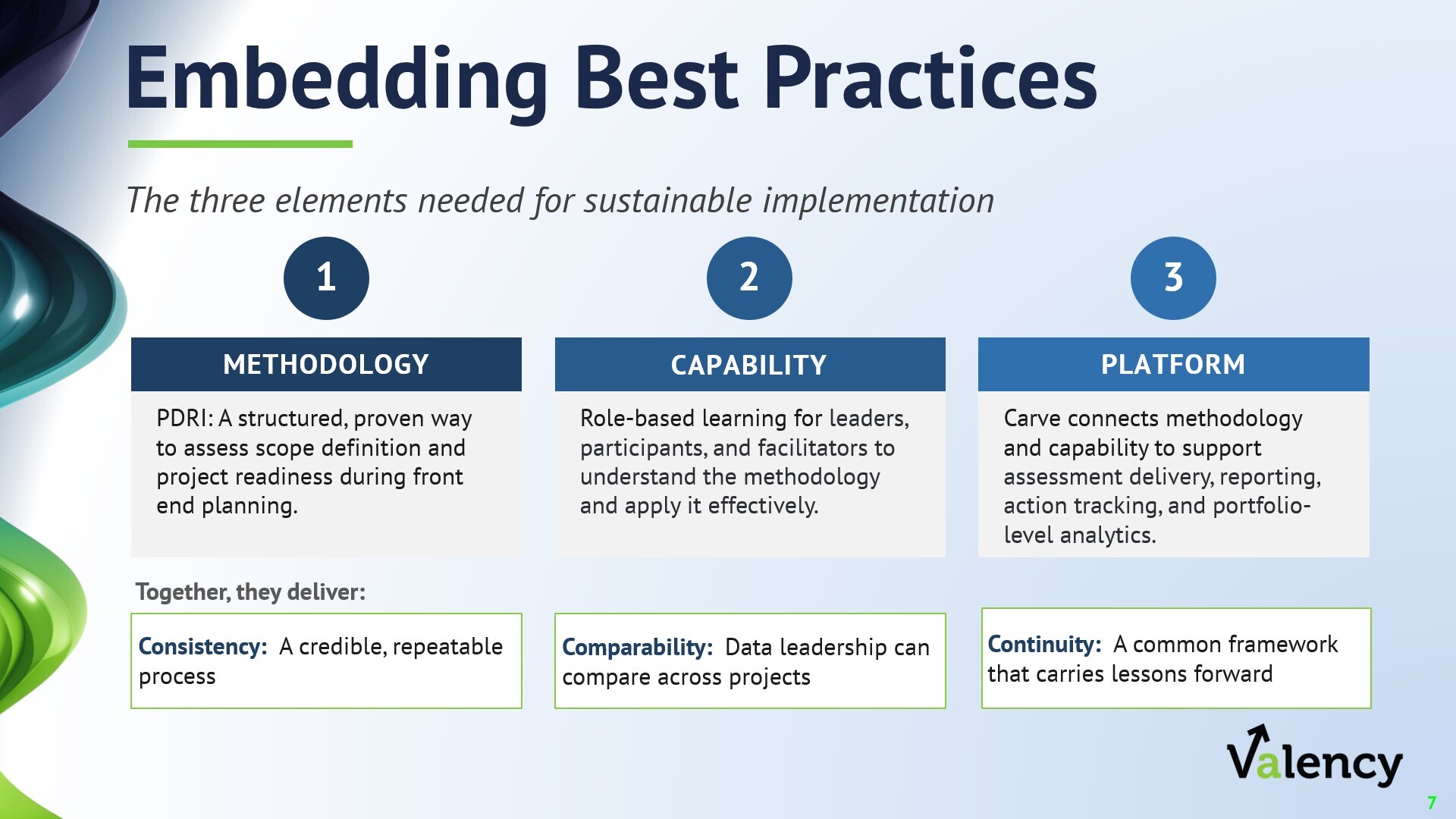
Together, those elements allow the level of rigor to be right-sized to each project while the underlying process remains consistent.
Technology can help make that practical at scale. A platform like Carve is one way to create the common workflow, reporting, and data structure needed to apply readiness consistently across projects.
AI can also help improve consistency in how readiness results are interpreted and communicated. We've introduced it to help facilitators synthesize complex findings, identify recurring themes, and present clearer, more consistent insights to decision-makers, while keeping professional judgment at the center of the process.
The capital projects industry already knows a great deal about what good project delivery looks like.
The harder challenge is applying proven practices consistently across different projects, project tiers, teams, and lifecycle stages.
That means being able to answer a simple question before important commitments are made:
Are we actually ready?
And answering it through a process that is rigorous enough for a megaproject, practical enough for a smaller site-led project, and consistent enough for leadership to understand readiness across the portfolio.
Best practices improve individual projects. Consistency is what makes better performance repeatable across the portfolio.
Dig deeper and explore PDRI, Construction Readiness, and Commissioning & Operational Readiness webinars