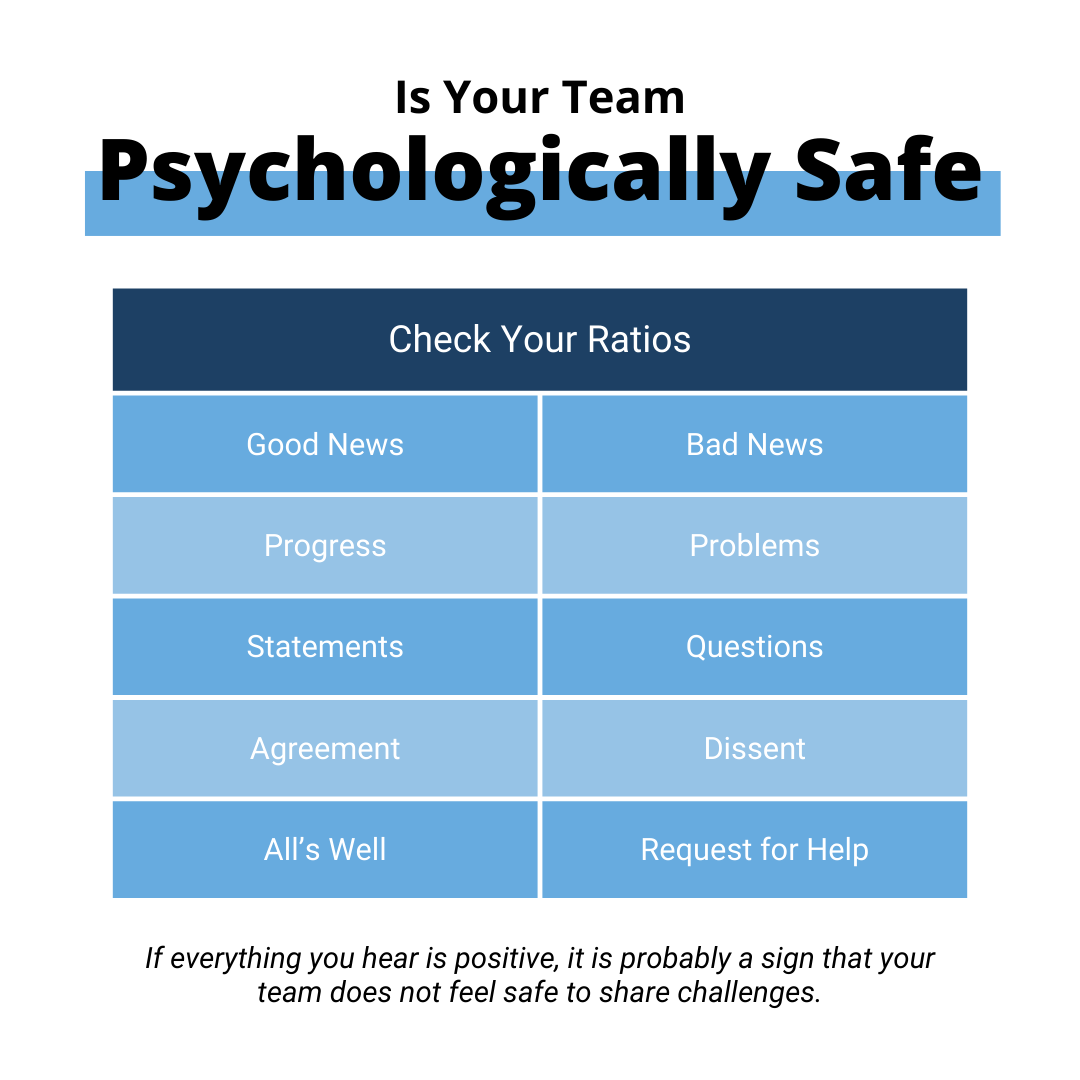
In the construction industry, silence can be dangerous. Beyond affecting schedules and budgets, silence can lead to serious safety risks. But if there are such high-stakes in these projects, why do team members stay silent?
Speaking up to share an idea, concern or mistake can involve significant interpersonal risk. Interpersonal risk refers to any action that may impact one’s social and personal standing within a group. Both consciously and unconsciously, we all try to avoid interpersonal risk as much as possible. We all want to be seen as productive, efficient, and intelligent contributors by our colleagues and leaders—and speaking up can feel like putting that image in jeopardy.
In fact, one study revealed that 85% of respondents reported at least one occasion where they felt they could not raise a concern with their boss, even though they believed it was important.
While staying silent may protect someone from interpersonal risk, it can also allow critical issues to go unresolved, which, as stated above, can have dangerous consequences. Therefore, it is critical that leaders prioritize cultivating a sense of psychological safety and encourage their team to share their observations, concerns, and even mistakes.
Harvard Business School Professor Dr. Amy C. Edmondson has defined psychological safety as “the belief that the work environment is safe for interpersonal risk taking” and “the experience of feeling able to speak up with relevant ideas, questions, or concerns.” In a psychologically safe environment, colleagues trust and respect one another, feel an obligation to be candid with their observations and concerns, and do not fear punitive consequences for seeking help or admitting mistakes. This does not mean that high standards or deadlines are not expected. Instead, psychological safety means that as people work towards these standards and deadlines, they feel safe asking questions, discussing challenges, and collaborating openly.
In the context of project assurance assessments, like Project Definition Rating Index (PDRI), Construction Readiness, and Commissioning & Operational Readiness Assessments, a psychologically safe environment is one that encourages all project stakeholders to voice their input. This means all project stakeholders actively and openly contribute to discussions about progress, concerns and gaps, and even engage in productive disagreement. Open discussion helps the project team succeed by identifying gaps and defining actionable steps to ensure successful completion.
As a facilitator, it is important to prioritize cultivating a culture of psychological safety in your project assurance assessments. To truly understand the state of a project, the project team must feel safe to share all updates—not just the positive ones. Dr. Edmondson has shared three key steps that can shift attitudes and promote psychological safety:
Ultimately, creating a psychologically safe work environment enables free exchange of ideas and concerns. This is essential for the success of project assurance assessments. When participants feel comfortable sharing updates, gaps, delays, and mistakes, the project team can collaborate more effectively to find solutions. By setting the stage, inviting participation, and responding productively, we can strengthen psychological safety within our project teams and enhance physical safety by eliminating the risks that come with silence.
References
Edmondson, A. C. (2018). The fearless organization: creating psychological safety in the workplace for learning, innovation, and growth (1st ed.). Wiley.
Milliken, F. J., Morrison, E. W., & Hewlin, P. F. (2003). An Exploratory Study of Employee Silence: Issues that Employees Don’t Communicate Upward and Why. Journal of Management Studies, 40(6), 1453–1476. https://doi.org/10.1111/1467-6486.00387
Stern. “Amy Edmonson | Understand 3 Types of Failure to Activate Bolder Decision Making & Better Teamwork.” YouTube, 7 Nov. 2022, www.youtube.com/watch?v=IIeTyxjM4RY.