

PDRI
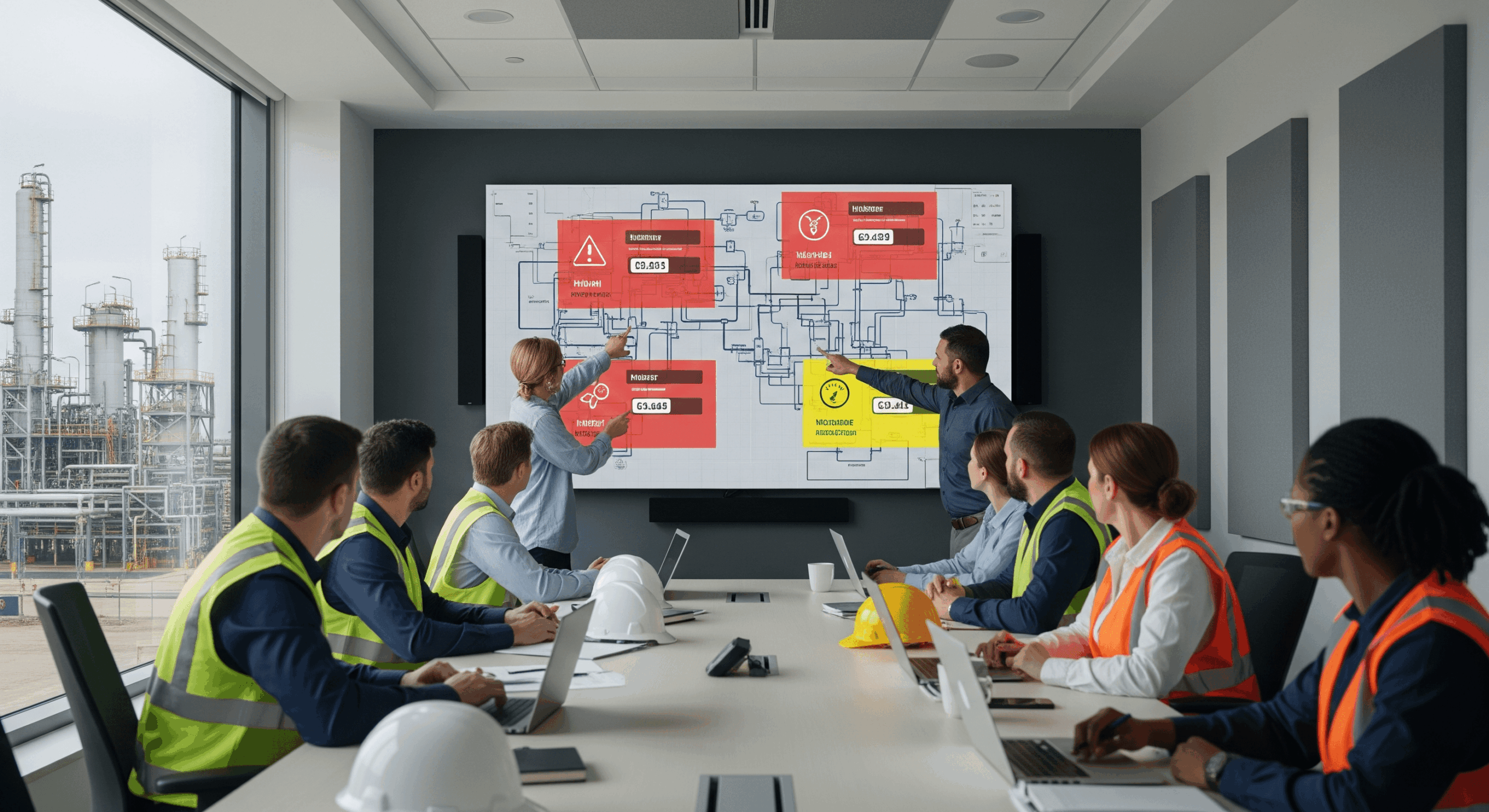

In the Construction Readiness Assessment (CRA), Health, Safety & Security is a stand-alone category, but a strong safety culture spans the entire project lifecycle and is woven into workforce readiness, planning, execution, and even handover. This year’s Construction Industry Institute (CII) RT-422 research reinforces that reality, presenting 19 artificial intelligence (AI) use cases that shift safety from reactive response to proactive prevention.
One of my earliest conversations at a CII conference was with a now-retired professional who told me, “If you always make safety a priority, cost and schedule performance will follow.” That insight rings truer than ever. AI is now giving us tools to act on safety risks faster, anticipate hazards earlier, and embed prevention into every stage of project delivery.
While CII members continue to outperform industry averages for Total Recordable Incident Rate (TRIR) and Days Away, Restricted, or Transferred (DART), the persistence of fatal incidents underscores the continued need for innovative approaches to safety.
RT-422 identified 19 AI use cases that move safety from reactive response to proactive prevention. These span the project lifecycle and roles, from design engineers and field engineers to the craft workforce. The research covers innovations like AI-driven hazard detection, real-time environmental monitoring, adaptive safety training, and predictive analytics for risk mitigation.
By embedding these AI capabilities into CRA-aligned planning and execution, owners and contractors can elevate readiness from procedural compliance to actively engineering safety into every project start.
The RT-422 findings have high applicability across several CRA categories:
Integrating these AI solutions into CRA discussions helps both owners and contractors shift from asking “Do we have a safety plan?” to “Is our safety program built to prevent incidents under the conditions we will actually face?”
The Artificial Intelligence for Construction Safety research was made possible through the collaboration of CII owners, contractors, and academics. Special thanks to the RT-422 research team members for their contributions:
McDonough Bolyard Peck, Air Products, Fluor Corporation, ExxonMobil Corporation, Oracle USA, Texas A&M University, Kiewit, Worley, McDermott International, FTI Consulting, Ontario Power Generation, S&B Engineers, Cargill, Occidental Petroleum Corporation, Alvarez & Marsal, Deloitte, Bruce Power, The Procter & Gamble Company, Louisiana State University.
Their combined expertise ensured this research is grounded in real-world safety challenges and delivers actionable AI solutions for serious incident and fatality prevention.
Present: Too often, safety decisions are made without a full, real-time picture of site conditions. Are you using live data and situational awareness tools to make faster, better safety decisions as work unfolds?
Future: AI can predict risks, adapt training instantly, and prevent incidents before they happen. The first step could be as simple as piloting one tool, applying it to a high-risk scope, or sharing early wins. How will you lead adoption, while also addressing worker trust, data quality, integration complexity, privacy, and cost, so AI-enabled safety becomes a reality on your projects?